


Seville Orange Season: From Orchard to World’s Best Marmalade
Seville Orange Season: From Orchard to World’s Best Marmalade
The brief winter moment when Seville oranges arrive and marmalade season begins.

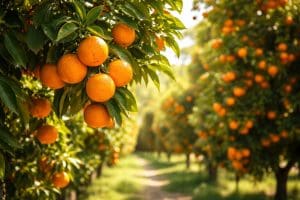
It’s Seville orange season, and in an artisan kitchen that means one thing: marmalade time.
There’s a moment every winter that still stops us in our tracks. The boxes of Seville oranges arrive, glossy and fragrant, their skins glowing as if they’ve been filled with captured sunshine.
Before a single jar is filled, the kitchen smells different. Sharper. Brighter. Almost electric.
The counters are cleared, the pans come out, and everything slows down.
This is the season that marmalade makers wait for all year.
At The Artisan Kitchen, marmalade isn’t just something we make.
It’s where everything began, and it remains at the heart of what we do.
Our preserves have collected hundreds of awards over the years. If you’d like to explore them, you can browse the full collection here:
our awards page.

Why Seville Oranges Matter
Seville oranges are unlike any other citrus. Intensely aromatic, naturally high in pectin and unapologetically bitter, they are the reason marmalade exists as its own category rather than simply a citrus jam.
That bitterness is essential. It gives marmalade its backbone, stopping it from tipping into sweetness and allowing layers of flavour to unfold slowly on the palate.
Their season is brief, lasting only a few winter weeks. Miss it, and you wait another year.

How We Source Our Sevilles
Every Seville orange we use is organic and sourced from a single orchard in Spain.
Using fruit from one orchard gives us consistency, traceability and understanding.
We know the fruit, its character and how it behaves in the pan from year to year.
The oranges are harvested at peak ripeness and brought to us quickly so we can begin cooking while the fruit is still vibrant.
The Character of a Seville Orange

Not all Seville oranges are the same. Even within one orchard, the fruit shifts subtly from year to year depending on rainfall, winter temperatures and how quickly the season warms.
Each season we taste, adjust and respond. A little more resting time for the rind. A longer extraction. Small decisions that shape the final jar.
Rind, Cut and Texture

Rind is where marmalade lives or dies. Too thick and it dominates. Too thin and it disappears.
We hand cut our rind to suit each marmalade style, adjusting the width depending on the balance we want to achieve.
Sugar and Balance
Sugar isn’t there to sweeten marmalade into submission.
Its role is structure, preservation and balance.
Used carefully, it lifts the fruit rather than masking it.
Used heavily, it flattens everything.
The Set Is a Moment, Not a Number
One of the most misunderstood parts of marmalade making is the set.
There’s a point in cooking where the sound changes and the surface turns glossy.
A good marmalade should be supple, not stiff. It should move on the spoon and relax on the toast.


